
Readers Book Club Guide for
Spoiler Alert: Please note that the discussion guide below contain spoilers to the book.
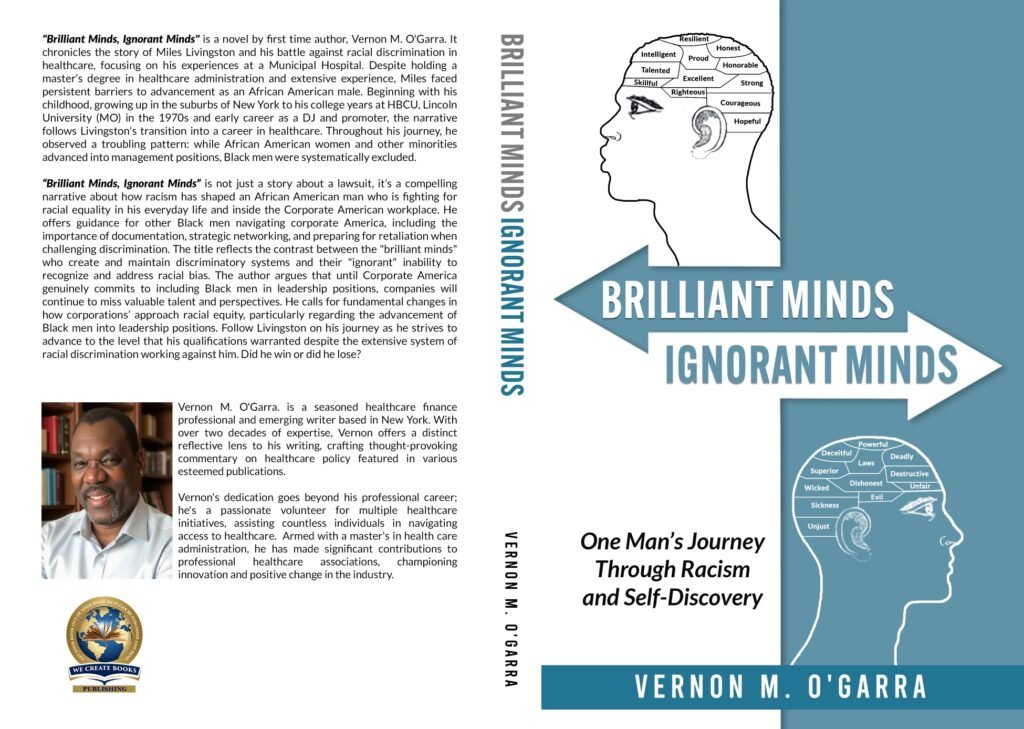
1. Throughout the manuscript, Miles describes himself and others as having “brilliant minds but ignorant minds.” How does this dichotomy manifest in different characters and institutions? What does this reveal about how knowledge and blindness can coexist?
2. Were there any moments where you strongly disagreed with the author? What sparked that reaction? If you could ask the author one question after reading this book, what would it be and why?
3. Have you ever experienced a time when you didn’t receive the support you expected from your boss and all your hard work went unappreciated ? Did you feel this lack of support was racially motivated? How did you deal with incompetent leadership inside your organization ?
4. Miles is concerned that H.R. cannot see his side of the discrimination argument. What is your feeling? Does he have a valid concern?
5. After years of being held back, Miles reaches his boiling point and files a race discrimination complaint against his employer. What do you think about his decision ? Do you feel he had been treated fairly? What would you have done if you were in Miles shoes?
6. Do you find irony in the fact that Miles decides to remain employed at Municipal Hospital after receiving a discrimination settlement? Do you think you could remain employed with the same organization after suing them?
7.Miles talks about living a double-life, “The Me Nobody Knows” (Chapt. 13). How do you think he is able to hold it all together, throughout all the turmoil in his life ?
8.Miles believes that “Networking” is the avenue to follow, to land a management position. However, his Director discourages his approach. Do you think his Director would have advised her female subordinates differently? Why ?
9. Deep down inside, Miles was infuriated that a Federal Judge would allow Municipal Hospital to submit redacted emails into evidence. Do you think the Judge made the right decision?
10. Miles believes that D.E.I. programs are not run properly. When set up correctly, D.E.I. programs do not lower standards, they deliver superior African American students, job candidates and outstanding minority vendors. What are your thoughts about D.E.I. programs?
11. Miles frequently discusses how discrimination is often “invisible” to those not experiencing it. What were some instances where this invisibility manifested, and how did it complicate his efforts to address workplace discrimination?
12. Miles concedes that his past criticisms of Black women came from “a place filled with anger and misunderstanding.” Do you feel his attitude is valid, or does he overreact? How might personal struggles impact our perception of others’ success, particularly across gender lines within the same racial group?
13. The author dedicates a chapter in the book to Black women. He references a quote from Maya Angelou: “You may not control all the events that happen to you, but you can decide not to be reduced by them.” How does this philosophy manifest in the experiences of Black women in corporate America as described in the chapter?
14. The author details the complex relationship between Black men and Black women in the workplace. How does Miles’ perspective on this relationship evolve throughout his journey, and what insights does this offer about intersectionality in professional environments?
15. Miles concludes his story by talking about the True Cost of Racism, to validate his argument about ongoing racial injustice in this country. Why do you think he choose to highlight the “True Cost of Racism” ? How does this framing shift the conversation about workplace discrimination to broader societal issues ?
The story of Miles Livingston celebrates the culture of New York through the eyes of a young Black man. It chronicles his experiences, struggles, and triumphs while navigating the complexities of identity and community while highlighting resilience and hope.
An interesting read on one black American man’s perspective of growing up in the 60s and 70s living in the Long Island/New York area of the United States. Coping with the unavoidable stereotypes, biases and racism that have had a profound impact on how people see themselves and view this country but ultimately to still find achievement and success.
The story of Miles Livingston celebrates the culture of New York through the eyes of a young Black man. It chronicles his experiences, struggles, and triumphs while navigating the complexities of identity and community while highlighting resilience and hope.
All Rights Reserved @Vernon M. O’Garra 2025
Design and Development by Daysha Freeman
An interesting read on one black American man’s perspective of growing up in the 60s and 70s living in the Long Island/New York area of the United States. Coping with the unavoidable stereotypes, biases and racism that have had a profound impact on how people see themselves and view this country but ultimately to still find achievement and success.