

To the one whose unwavering support, wisdom, and belief in me never faltered—even when the world tried to dim my light. Your encouragement gave me the strength to tell this story. This book is as much yours as it is mine. Thank you, from the depths of my heart.
Spoiler Alert: Please note that the discussion guide below contain spoilers to the book.
2. Were there any moments where you strongly disagreed with the author? What sparked that reaction? If you could ask the author one question after reading this book, what would it be and why?
9. Deep down inside, Miles was infuriated that a Federal Judge would allow Municipal Hospital to submit redacted emails into evidence. Do you think the Judge made the right decision?
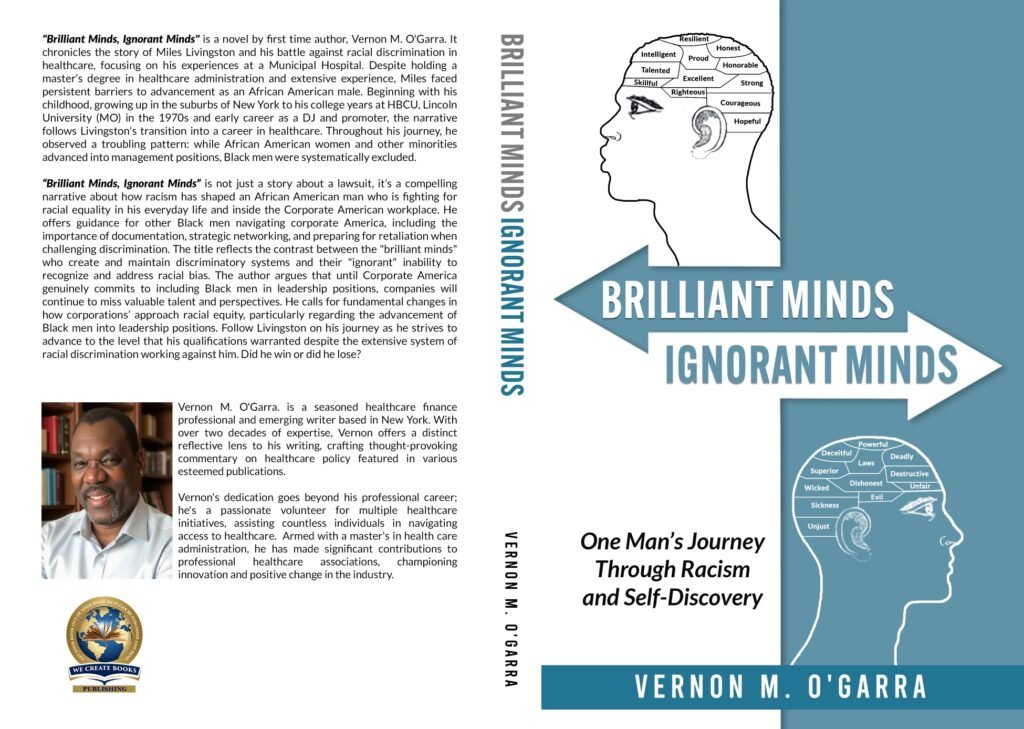
Brilliant Minds, Ignorant Minds is a novel by first-time author Vernon M. O’Garra. It chronicles the story of Miles Livingston and his battle against racial discrimination in healthcare, focusing on his experiences at Municipal Hospital. Despite holding a master’s degree in Healthcare Administration and extensive experience, Miles faced persistent barriers to advancement as an African American male.
Beginning with his college years at Lincoln University in the 1970s and his early career as a DJ and promoter, the narrative follows Livingston’s transition into healthcare as a Hospital Care Investigator. Throughout his career, he observed a troubling pattern: while African American women and other minorities advanced into management positions, Black men were systematically excluded.
After being repeatedly passed over for promotions in favor of less qualified candidates, Livingston filed two discrimination lawsuits against Municipal Hospital. While the first case resulted in a modest settlement, the discrimination continued. His second lawsuit uncovered emails and communications revealing how hospital leadership actively colluded to prevent his advancement.
The memoir explores what Livingston terms “flawed legislation“—laws and policies that appear to protect against discrimination but fail to specifically address discrimination against Black men. He notes that employers can meet diversity requirements by hiring Black women while continuing to exclude Black men from leadership positions.
This book also examines the complex dynamics between Black men and Black women in corporate settings, observing how successful Black women—despite earning high salaries—experience both racial and gender bias.
The book concludes with Livingston finally achieving a supervisory position late in his career, though not at the level his qualifications warranted. He offers practical guidance for other Black men navigating corporate America, including the importance of documentation, strategic networking, and preparing for retaliation when challenging discrimination.
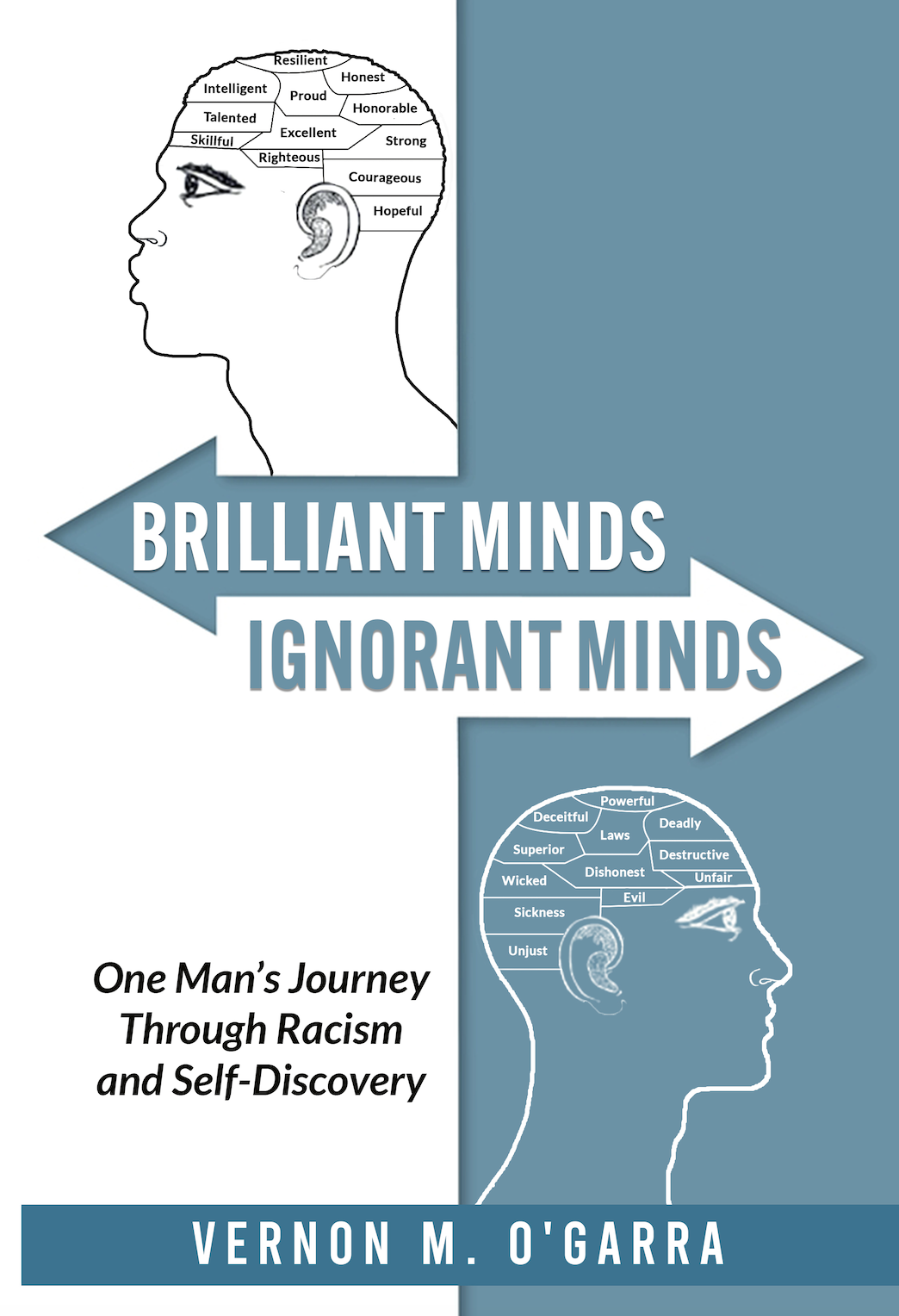
The title, Brilliant Minds, Ignorant Minds, refers to the contrast between the “brilliant minds” who create and maintain unfair policies and the “ignorant minds” unwilling to recognize racial and gender bias. The author argues that until Corporate America genuinely commits to including Black men in leadership positions, companies will continue to miss out on valuable talent and perspectives.
Brilliant Minds, Ignorant Minds has the feel of Ta-Nehisi Coates’ Between the World and Me and the aggression of Michelle Alexander’s The New Jim Crow—a gripping tale of life inside Corporate America from the perspective of a Black man.
A must-read.
The story of Miles Livingston celebrates the culture of New York through the eyes of a young Black man. It chronicles his experiences, struggles, and triumphs while navigating the complexities of identity and community while highlighting resilience and hope.
An interesting read on one black American man’s perspective of growing up in the 60s and 70s living in the Long Island/New York area of the United States. Coping with the unavoidable stereotypes, biases and racism that have had a profound impact on how people see themselves and view this country but ultimately to still find achievement and success.
The story of Miles Livingston celebrates the culture of New York through the eyes of a young Black man. It chronicles his experiences, struggles, and triumphs while navigating the complexities of identity and community while highlighting resilience and hope.
The inspiration for “Brilliant Minds, Ignorant Minds” stems from many of my lived experiences as an African American man navigating workplace discrimination throughout my career. While there wasn’t a single moment that sparked the idea, the culmination of numerous incidents, especially watching talented and educated Black men like myself being barred from high-salaried jobs, created an urgent need to document these experiences and observations.
After being denied job after job after job, I found myself at a crossroads. I had fought against a system that consistently denied African American men opportunities for advancement despite their qualifications, and I needed to process these experiences. Writing became therapeutic—a way to make sense of the discrimination I endured while working toward my master’s degree in healthcare administration and consistently being overlooked for promotions.
The breaking point came after watching countless women and white male colleagues with fewer qualifications advance while I remained stagnant. My colleagues from grad school were head and shoulders beyond me in terms of salary.
I knew this pattern wasn’t coincidental. The stark realization that systemic racism was actively working against me—despite my education, published articles, and stellar work performance—compelled me to document this journey.
This book serves as both personal catharsis and a vehicle to expose what I call “the invisible injustice”—discrimination against Black men that often goes unacknowledged even in diversity discussions. My experiences revealed how legislation meant to protect minorities can be manipulated through the “protected class” concept, allowing employers to meet diversity requirements by promoting Black women while systematically excluding Black men. Writing this book became necessary not just for my healing, but as testimony to a pervasive problem that needs addressing.
All Rights Reserved @Vernon M. O’Garra 2025
Design and Development by Daysha Freeman

An interesting read on one black American man’s perspective of growing up in the 60s and 70s living in the Long Island/New York area of the United States. Coping with the unavoidable stereotypes, biases and racism that have had a profound impact on how people see themselves and view this country but ultimately to still find achievement and success.